
汽车叫声—汽车叫声怎么写
汽车叫声,这个看似简单的词汇,实际上 encapsulates a complex interplay of mechanical engineering, acoustics design, and material science. It represents the collective "voice" of a car, shaped by its engine, transmission, exhaust system, and other subsystems. Understanding the "car sound" is not merely about listening to a sound; it's about decoding the language of engineering that translates the car's performance into audible form.
一、发动机的低频韵律
The heart of the car's "sound" lies in its engine. Different engines have distinct signatures. For instance, a turbocharged four-stroke engine like the Toyota's 2.4L or Honda's 1.5L produces deep, resonant rumble, rich in midrange frequencies. In contrast, a naturally aspirated engine may sound more mellow, akin to a rumble beneath the earth.
Advanced engine designs, such as Variable缸容量 Management (VCM) or Variable Timing Ignition (VTi), tweak these signatures, aiming to optimize performance and reduce noise. Turbochargers introduce pulsating noise, characteristic of the interplay between the compressor and turbine.
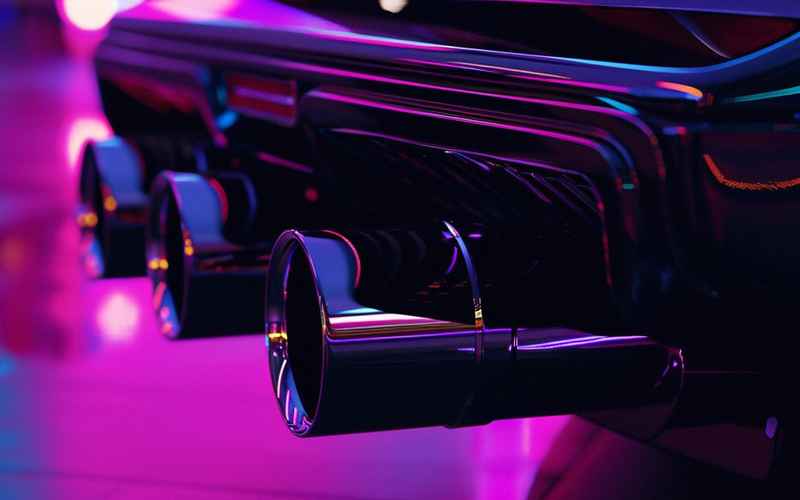
The exhaust system, another critical component, further shapes the car's "sound." Resonant designs can amplify certain frequencies, creating a unique tone. On the other hand, some cars opt for open designs to reduce high-frequency noise.
二、驾驶者的心声
The car's "sound" extends beyond mere engine noise. Acceleration, braking, and gear changes all leave their mark. For instance, a smooth shift through gears can be heard as a series of ascending tones, a testament to the transmission's intelligence.
In terms of noise control, modern cars integrate noise reduction technologies. These include strategic placement of sound-dampening materials, computer-controlled suspension systems, and advanced audio systems designed to reduce low-frequency transmission.
The interior cabin is another battlefield. Passive noise control techniques, such as acoustic damping and sound-absorbing materials, are employed to shield the cabin from external noise. Furthermore, active noise control systems, utilizing computer algorithms to predict and counteract low-frequency rumble, are increasingly common.
三、声音背后的工程智慧
The engineering behind a car's "sound" is intricate. It involves meticulous calculations of acoustics, materials, and design. For instance, the shape of the cylinder head, the length of the exhaust pipe, and the timing of engine components all play a role in shaping the final sound.
Moreover, the integration of hybrid systems or Plug-in Hybrid Systems (PHEV) adds another layer of complexity. These systems not only affect the car's performance but also its "sound," as electric motors and internal combustion engines complement each other in a unique way.
The future of car "sounds" likely lies in the synergy of electric and thermal engines, each contributing their own signature. As technology advances, cars will become more integrated with audio systems, offering users a more customizable and interactive listening experience.
In conclusion, the "car sound" is not merely a background noise; it's a symphony of engineering marvels, reflecting the car's performance, comfort, and technological prowess. Understanding and appreciating this "car sound" is to appreciate the art and science behind the wheel.