日本文化经济学院_日本文化经济学院2022年招生分数
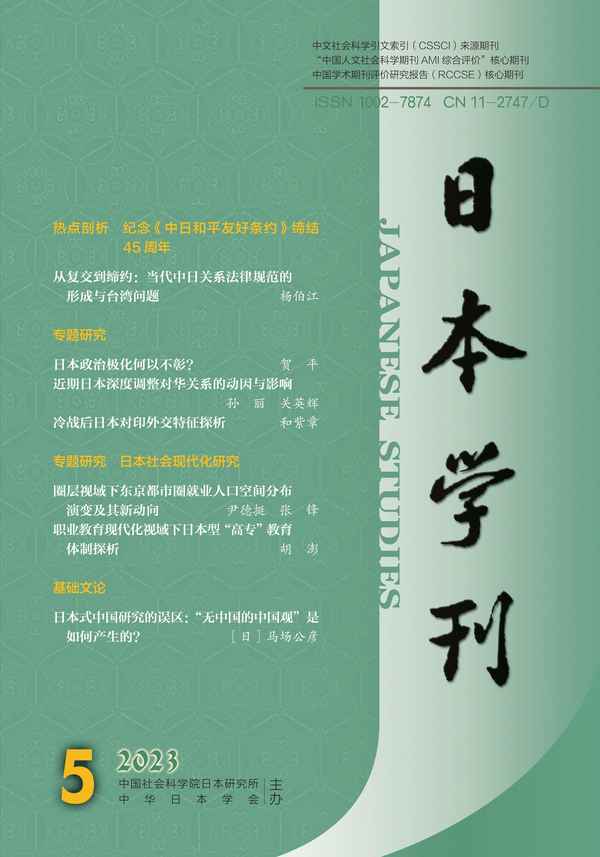
热点剖析 纪念《中日和平友好条约》缔结45周年
- 从复交到缔约:当代中日关系法律规范的形成与 (杨伯江)
专题研究
- 日本政治极化何以不彰? (贺 平)
- 近期日本深度调整对华关系的动因与影响 (孙 丽 关英辉)
- 冷战后日本对印外交特征探析——基于量化文本分析 (和紫章)
专题研究 日本社会现代化研究
- 圈层视域下东京都市圈就业人口空间分布演变及其新动向 (尹德挺 张 锋)
- 职业教育现代化视域下日本型“高专”教育体制探析 (胡 澎)
基础文论
- 日本式中国研究的误区:“无中国的中国观”是如何产生的? ([日]马场公彦)
外文摘要
- Abstracts
- 日本語要旨
从复交到缔约:当代中日关系法律规范的形成与
杨伯江
内容提要:中日从复交到缔约,前后耗时六年,历经艰苦谈判,中日关系通过“两步走”最终实现了历史性转折。《中日和平友好条约》从法律上确认了《中日联合声明》的各项原则和内容,规定了当代中日关系的整体架构、政治基础与发展方向:从宏观视域看,该条约具有超出中日双边关系的重大深远意义,是对战后亚太地区秩序法律基础的相互确认。中日复交到缔约谈判,始终是有形或无形的一大焦点。日方回避正面承认“一个中国”“台湾是中国的一部分”,意在制造战略模糊性、保持战略机动性。日本涉台“双轨两面”政策,既带有阶段性、功利性目的,更具长远战略考量,特别是对“日美安保”战略优先性、“旧金山体制”所谓法理权威性的维护,但其“双轨”“两面”本质从根本上决定了日本涉台政策的内在矛盾性、非整合性。基于对日美同盟的政治战略依赖,及为维护“旧金山体制”下获取的既得不当利益、同时限制中国国家统一方式的选择以实现对华牵制目的,日本难以改变既定立场,但其相关政策法理逻辑上的问题无疑值得更多关注及进一步深入系统研究。
关 键 词:中日关系 和平友好条约 台湾 旧金山体制 日美安保体制
作者简介:杨伯江,中国社会科学院日本研究所、中国社会科学院东海问题研究中心研究员,博士生导师。
日本政治极化何以不彰?
贺 平
内容提要:近年来日本的政治生态呈现“分化”现象,但“极化”现象并不突出。无论是与同时期欧美诸国还是与战后初期本国的政治生态相比,这一反差均较为明显。日本政治极化不彰的原因集中体现在政党和社会两个层面。政党层面的原因在于:缺乏长期稳定的、与自民党相抗衡的第一大在野党;主要政党的政策议题立场相对接近,且政党之间的议题分歧对普通选民的分化作用较弱;具有影响力的极左翼或极右翼政党尚未成型。从社会层面分析来看,尽管政治右倾化有所加剧,但由于中间选民增加和民众“去意识形态化”加速发展、“身份政治”在日本社会相对弱化、右翼势力成分多元等因素,政治极化的社会性动因有所缓解。
关 键 词:日本政治 政治极化 政党政治 社会性分析
作者简介:贺平,复旦大学日本研究中心教授。
近期日本深度调整对华关系的动因与影响
孙 丽 关英辉
内容提要:随着中美关系快速走向质变,为了配合美国全面打压中国的“新冷战”战略,日本深度调整对华政治经济关系,抛弃其长期以来遵循的“平衡外交”战略,转而实施对美“一边倒”的外交战略。在安全领域,日本全面提升“安全靠美国”在其国家安全战略中的地位;在经济领域,日本采取“多管齐下”的举措,试图快速打破“经济靠中国”的战略格局。这一战略调整的难点在于打破“经济靠中国”格局,但对日本而言是“说易行难”。日本企图打破“安全靠美国、经济靠中国”的战略选择不可能完全如愿,但其造成的影响不容小觑,中国需高度警惕并采取有效措施积极应对。
关 键 词:对华关系 平衡外交 “一边倒”外交 回旋空间 经济利益
作者简介:孙丽,辽宁大学国际经济政治学院教授,博士生导师;关英辉,辽宁大学国际经济政治学院博士研究生,沈阳工学院经济与管理学院副教授。
冷战后日本对印外交特征探析
——基于量化文本分析
和紫章
内容提要:日印两国关系在冷战结束后发展迅速,成为影响地区秩序的重要双边关系之一。从双向对冲“多样化”战略视角出发,日本接近印度的外交目标十分明确,旨在对冲中美博弈以及日本对华消极情感认知带来的风险。特别是为对冲在安全领域被美国“抛弃”的担忧和在经济领域对华非对称依赖的焦虑,日本选择加强对印关系,在不同时期展现出不同外交特征,即“有限接触(1990—1999年)”、“加强战略合作(2000—2009年)”以及“构建‘准同盟’关系(2010—2020年)”,由此实现了双边关系的渐进式升级。通过量化文本分析也实证了日本对印积极情感认知和对华消极情感认知逐渐上升。中日印三国存在着复杂关系,中日之间的历史纠纷及领土争议、中印之间的边境争端等因素将在未来较长一段时间内对三国合作与竞争关系产生影响。
关 键 词:日本对印外交 双向对冲 对外情感认知 量化文本分析
作者简介:和紫章,西安外国语大学日本文化经济学院讲师。
圈层视域下东京都市圈就业人口空间分布演变及其新动向
尹德挺 张 锋
内容提要:百余年来,东京都市圈的就业人口空间变化可谓日本社会变迁的时代缩影。基于1920—2020年日本国势调查数据,本文通过梳理东京都市圈的就业人口空间分布演变的阶段性特征及其新动向发现:(1)东京都市圈的就业人口空间分布历经了从集中到扩散、再到回归的动态圈层缩放过程;自2005年以来,“向心力”逐渐取代“离心力”成为东京都市圈就业人口空间布局的新动向。(2)产业与行业的“向心双回归”是推动近些年东京都市圈就业人口空间变动的重要引擎,其中,第三产业特别是金融业、IT业等高技能行业在核心区圈层的率先回归是牵引就业人口向心回归的标识性特征。(3)从理论层面看,一方面,东京都市圈就业人口圈层的空间变动印证了圈层结构理论关于生产要素环状空间分布特征及向外扩散过程的阐释;另一方面,人口要素在向外扩散之后又出现了向心回归趋势。就后者而言,需要突破工业社会的思维定式和藩篱,发现数字社会背景下生产技术条件、社会生产组织方式以及个性化生产(需求)模式对城市空间的新依赖,以探索提炼就业人口空间分布的新归因。
关 键 词:东京都市圈 就业人口 空间分布 产业结构 行业分布 高技能就业部门 向心回归
作者简介:尹德挺,北京行政学院教授;张锋,中化资本有限公司中级政工师。
职业教育现代化视域下日本型“高专”教育体制探析
胡 澎
内容提要:日本是世界上职业教育发达的国家之一,职业教育体系、门类、培养目标、教学模式等均有其独特性,尤其是1962年创立的五年一贯制高等专门学校伴随日本现代化进程,培养了大批具有“工匠精神”的中高级技术技能人才,支撑了日本制造业的发展。“高专”教育体制打通了职业教育、普通教育与高等教育的通道,并通过开设符合时代需要的专业化课程,凭借产教融合、科教融合及国际化办学理念开创了独具特色的日本型职业教育模式。“高专”教育体制在提升人口素质、服务“制造业立国”战略、促进地方经济社会发展以及维护社会公平等方面也发挥了积极作用。日本型“高专”教育体制对于中国职业教育改革、中国式现代化建设具有一定借鉴意义。
关 键 词:职业教育现代化 高等专门学校 教育体制 普职融通 制造业
作者简介:胡澎,中国社会科学院日本研究所研究员、中国社会科学院大学教授,博士生导师。
日本式中国研究的误区:“无中国的中国观”是如何产生的?
[日]马场公彦 周 彤 金 灵(译)
内容提要:对比中日两国出版界关于对方国家主题的书籍出版状况,梳理近代以来日本东洋学的导入和中国学发展背景下日本式中国研究的形成过程,通过“出版”与“研究”两条主线探讨日本的中国研究可以发现,近代以来,随着中国历时与共时的变化,日本关于中国的研究和观点的认知框架不断调整。战前的中国研究,随着日本的帝国扩张战略,倾向于进行对接其国家需求的政策研究;战后的中国研究转向关注与新中国适配的问题和认识框架,忽略了对日本东洋学和中国学的知识遗产的继承;当代的中国研究更受与研究对象距离的变换、中国综合国力增强、对美过度依赖等因素的影响,时常产生摩擦与误解,已背离真实的中国形象,存在仅选择对己有利解释的危险。如何从中国生活者的角度构建正确理解中国的认知框架,是当今日本媒体和学术界面临的重要课题。
关 键 词:中日关系 出版业 汉学 中国学 当代中国研究
作者简介:马场公彦,北京外国语大学北京日本学研究中心副教授。
译者简介:周彤,北京大学日语系副教授;金灵,北京大学日语系博士研究生。
From Reestablishing Diplomatic Ties to Signing the Treaty: The Formation of Legal Norms in Contemporary China-Japan Relations and the Taiwan Issue
Yang Bojiang
Abstract: From the resumption of diplomatic relations to the conclusion of the Treaty between China and Japan, spanning six years of strenuous negotiations, China-Japan relations have undergone a historic turnaround through the “two-step” approach. The “Treaty of Peace and Friendship between Japan and the People’s Republic of China” legally affirms the principles and content outlined in the “China-Japan Joint Communiqué”,and lay up the overall framework, political foundation and developmental direction of the contemporary China-Japan relations. From a macroscopic perspective, the treaty holds significant far-reaching implications beyond the bilateral relations. It serves as a mutual confirmation of the legal basis of the post-war order in the Asia-Pacific region. In negotiations of normalizing China-Japanese relations and signing of treaty, the Taiwan issue always remain a tangible or intangible focus. Regarding Taiwan’s status, Japan attempts to avoid openly acknowledging “one China” and “Taiwan as a part of China” aiming to create strategic ambiguity and maintain flexibility. Japan’s “dual-track and double-face” policy on Taiwan is characterized not only by phased, utilitarian purposes but also by long-term strategic considerations, especially the maintenance of the strategic priority of the “U.S. -Japan security system” and the alleged juridical authority of the “San Francisco system”. However, the essence of Japan’s “dual-track”, “double-face” approach fundamentally underscores the inherent contradictions and non-integrative nature of Japan’s Taiwan policy. Considering Japan’s political and strategic dependence on the U.S. -Japan alliance and its commitment to safeguarding vested interests acquired under the “San Francisco system”, while simultaneously limiting China’s options for national reunification to achieve containment objectives, Japan encounters challenges in altering its established position. Nevertheless, the discernible flaws in Japan’s related policy and legal rationale deserve further observation and comprehensive research.
Why Is Japan’s Political Polarization Unnoticeable?
He Ping
Abstract: In recent years, the political ecology of Japan has exhibited a phenomenon of “fractionalization”, which, however, is not very prominent. This contrast is fairly distinctive, compared with America and the European countries during the same period or with its own in the early post-war era. The reasons for the unnoticeability of political polarization in Japan rest with both party politics and social factors. The reasons at the party level are mainly threefold: lack of a long-term stable primary opposition party capable of countering the Liberal Democratic Party(LDP) of Japan, the policy positions of the major parties are relatively similar, and the differences in issues between these parties have a relatively limited impact on the differentiation of ordinary voters, no influential far-left or far-right parties have taken shape yet. From a social perspective, although there has been an increase in political rightward drift, the social dynamics of political polarization have been mitigated by the increase in the number of median voters and the accelerated development of “de-ideologization” among the public, the relative weakening of “identity politics” in Japanese society, and the diversification of the right-wing forces.
Japan’s Strategy of Deeply Adjusting Its Political and Economic Relations with China
Sun li and Guan Yinghui
Abstract: Amidst the rapidly evolving dynamics in Sino-U.S. relations, Japan has experienced significant shifts in its political and economic ties with China, to align with the United States’ strategy of comprehensive containment of China. Japan has forsaken its traditional “balanced diplomacy” approach and adopted a “one-sided” strategy favoring the United States. In the realm of security, Japan has enhanced its reliance on the United States for security in its national strategy. In the economic field, Japan has taken a “multi-pronged” approach, attempting to quickly break the “economic dependence on China” strategic pattern. The difficulty of this strategic shift is to break the pattern of “economic dependence on China”, but Japan’s room for maneuver is extremely limited. Although achieving a complete departure from the paradigm of “relying on the United States for security and China for the economy” may prove elusive, the impact of Japan’s strategic adjustments requires vigilance and proactive measures to address their implications effectively.
Quantitative Text Analysis of Japan's Diplomatic Relations with India Post-Cold War
He Zizhang
Abstract: The Japan-India relations have developed rapidly since the end of the Cold War and has become one of the critical bilateral relations affecting the regional order. From the perspective of the double hedging “diversification” strategy, Japan’s diplomatic goal of approaching India is obvious, aiming to hedge against the risks brought by the China-U.S. strategic competition and Japan’s negative emotional cognition of China. In order to hedge the fear of being “abandoned” by the U.S. in the security field and the anxiety of asymmetric dependence on China in the economic field, Japan has attempted to strengthen its relations with India, showing different characteristics at different historical stages, namely “limited engagement”(1990-1999), “strengthening strategic cooperation”(2000-2009) and “building a quasi-alliance relationship”(2010-2020). Through quantitative text analysis, it is also proved that Japan’s positive affective cognition of India and negative affective cognition of China have gradually increased. There are complicated relations between China, Japan, and India. The historical and territorial disputes between China and Japan, the border disputes between China and India, and other factors will impact the cooperation and competitive relations between countries for a long time.
The Spatial Evolution of Employment and Emerging Trends in the Tokyo Metropolitan Region: A Circular Perspective
Yin Deting and Zhang Feng
Abstract: The spatial changes in the employed population in the Tokyo metropolitan area over the past hundred years or so can be described as an epochal microcosm of social change in Japan. This paper uses data from the Japan National Survey (1920-2020) to examine how the distribution of employed people in the Tokyo metropolitan area has evolved over time, highlighting key characteristics and recent trends. It can found that, firstly the spatial distribution of the employed population in the Tokyo metropolitan area has undergone a circular pattern of transition from concentration to dispersion and then reconcentration. In particular, the centripetal force has recently emerged as the dominant trend, overshadowing the centrifugal force. Secondly, this centripetal resurgence in industries, especially the tertiary sector, including key high-skill industries such as finance and IT, has been instrumental in shaping the spatial dynamics of the working population in the Tokyo metropolitan area. Thirdly, in theoretical terms, the spatial shifts of the employed population in the Tokyo metropolitan area confirm the circular structure theory, which postulates the circular spatial distribution of production factors and their outwards diffusion. A notable observation, however, is that these population factors tend to return to the urban core after diffusion. This necessitates a departure from traditional paradigms of industrial society and calls for a profound comprehension of the evolving interdependence among production technology, the social organization of production, and customized production demands within the urban landscape of the digital society. Such an approach is crucial for discerning the emerging characteristics of the employed population distribution.
Japan’s “KOSEN” Education System in the Context of Modernization of Vocational Education
Hu Peng
Abstract: Japan is one of the world’s leading nations in vocational education, characterized by its unique vocational education system, disciplines, training objectives, and teaching methodologies. Particularly noteworthy is the Five-Year Integrated Higher Specialized Schools ( “KOSEN”) established in 1962, which, in tandem with Japan’s modernization, has nurtured a significant number of skilled mid-to high-level technical professionals imbued with the “craftsman spirit”. This has played a pivotal role in supporting the development of Japan’s manufacturing industry. The “KOSEN” system has opened up channels for vocational education, general education, and higher education, offering specialized courses that meet the needs of the times. By integrating industry and education, science and education, and incorporating international educational concepts, Japan has developed a distinctive vocational education model. The “Kosen” education system has played a constructive role in elevating the overall quality of the population, supporting the “Manufacturing-Led Nation” strategy, fostering regional economic and social development, and upholding social equity. The Japanese “KOSEN” education system provides valuable insights into China’s vocational education reform and the pursuit of a uniquely Chinese modernization.
Misconceptions in Japanese-Style Chinese Studies: Reasons for Emergence of the “China Perspective Without China”
Baba Kimihiko
Abstract: Regarding publishing, this paper aims to elucidate the characteristics and issues of Chinese-Japanese studies by statistically comparing Japan’s China-related books in the publishing industry with China’s Japan-related books. In terms of research, it examines the formation process of Japanese-Chinese studies, which has evolved in conjunction with the introduction of modern oriental studies and the development of Chinese studies. Japanese perspectives on Chinese studies and China have consistently adjusted their cognitive frameworks in response to changes in historical and contemporary China. In modern times, pre-war Chinese studies in Japan tended to be policy-oriented research that served Japan’s national interests, aligning with the country’s imperial expansion. Post-war Chinese studies began with a fresh perspective, concentrating on issues relevant to the evolving China, occasionally neglecting the intellectual heritage of prior Chinese studies. Overall, contemporary Chinese studies in Japan are often influenced by factors such as the geographical distance from the research subject, the complexities of China’s increasing comprehensive national power,and an excessive dependence on the United States. These factors frequently lead to friction and misunderstandings, causing Japanese perceptions of China to deviate from a realistic image, with the risk of interpreting information in a manner that serves their own interests. Constructing an accurate cognitive framework for understanding China from the perspective of people living in China is a crucial challenge for Japanese media and academia today.
復交から条約締結へ:現代中日関係における法律規範の形成と台湾問題
楊 伯江
要旨:中日両国は国交回復から平和友好約締結まで、前後6年間の歳月を費やし、苦難に満ちた交渉を経て、中日関係は「二段階に分けて」歴史的転換を最終的に実現した。『中日平和友好条約』は『中日共同声明』の諸原則と内容を法的に確認し、現代中日関係の全体的な枠組み、政治的基盤と発展方向を規定している。マクロの視点から見ると、条約は中日二間関係を超えた重大で深遠な意義を持ち、戦後アジア太平洋地域秩序の法的基盤を相互に確認するものである。中日国交回復から条約締結交渉に至るまで、台湾問題は常に有形·無形の大きな焦点であった。台湾の帰属問題で、日本側が「一つの中国」「台湾は中国の一部」を正面から認めることを避けたのは、戦略的曖昧性をつくり出し、戦略的機動性を維持することを意図しているからである。日本の台湾関連の「ダブルレール·両面」政策には、段階的·功利的な目的だけでなく、長期的な戦略的考慮もあり、特に「日米安保」戦略の優先性、「サンフランシスコ体制」のいわゆる法理の権威性の維持に対する戦略的考慮があるが、「ダブルレール」「両面」の本質は根本的にその台湾関連政策の内在的矛盾性、非整合性を決定づける。日米同盟への政治戦略的依存と、「サンフランシスコ体制」下で得た既存の不当な利益を守るため、同時に中国の国家統一の方法の選択を制限して対中牽制の目的を実現するため、日本はこれまでの立場を変えることは難しいが、その関連政策の法理上·論理上の問題点にはより注目し、一層深く系統的に研究する価値が間違いなくある。
なぜ日本の政治的分極化は明らかでないのでしょうか?
賀 平
要旨:近年、日本の政治生態は「分化」を見せているが、「分極化」現象は際立っていない。同時期の欧州や米国の国々と比較しても、または戦後初期の自国と比較しても、このコントラストは極めて顕著である。日本の政治的分極化が目立っていない原因は、政党レベルと社会レベルの両方に表れている。政党レベルでの原因は主に三つある。第一に、自民党に対抗できる長期的に安定した最大野党が存在しないことである。第二に、主要政党の政策課題についての立場が比較的近く、一般有権者の差別に影響を与えないことである。第三に、極左政党や極右政党がまだ形になっていないことである。一方で、社会レベルから見ると、政治の右傾化が一定程度激化しているが、無党派層の増加と民衆の「脱イデオロギー」の加速度的な進展、「アイデンティティ政治」の相対的な弱体化、右翼勢力の多様化などの要因により、政治的分極化の社会的動因がある程度弱まったことが挙げられる。
対中関係を大きく調整する日本の戦略
孫 麗 関 英輝
要旨:中米関係が急速に質的変化に向かうにつれ、中国の全面的抑圧を図る米国の新冷戦戦略に協力するために、日本は対中政治経済関係を大きく調整し、長期にわたって守ってきた「バランス外交」戦略を捨て去り、対米「一辺倒」の外交戦略を実施するようになった。安全保障分野では、日本は「安全保障面で米国に依存」という国家安全保障戦略における米国の位置づけを全面的に引き上げた。経済分野では、日本は「経済面で中国に依存」という構図からのいち早い打破を目指す複数の取り組みを行っている。日本が「安全保障面では米国、経済面では中国に依存する」という戦略枠組みを打破することは完全には不可能だが、その影は無視できない。中国は警戒を強め、有効な措置を講じて積極的に対応する必要がある。
冷戦後における日本の対印外交特徴分析—量的テキスト分析に基づいて—
和 紫章
要旨:日印関係は冷戦後急速に発展し、現在、地域秩序に影響を与える最も重要な二国間関係の一つとなっている。ダブルヘッジング「多様化」戦略の視点から見ると、日本がインドに接近する外交目標は明確である。即ち、それは中米競争及び日本の対中消極的感情·認識がもたらすリスクにヘッジングすることである。とりわけ、日本は安全保障分野において米国に「捨てられる」懸念と経済分野における対中非対称的依存から生じた焦りをヘッジングするため、インドとの外交関係を深めるという選択をし、「有限的接触)」(1990—1999年)、「戦略的連携の強化」(2000—2009年)、そして「『準同盟』の構築」(2010—2020年)の各時期にそれぞれの外交上の特徴が見られた。これにより、日印関係は漸進的な発展を実現できた。また、量的テキスト分析からも日本の対印感情·認識のポジティブ及び対中感情·認識のネガティブを実証できた。中日印関係は複雑で、中日間には歴史認識問題と領土紛争があり、中印間には辺境紛争がある。そのため、これらの要素は、将来比較的長い期間にわたって各国間の連携と競争関係に影響を与えるだろう。
「圏層」の視点からみた東京首都圏における雇用人口の空間的変化と新たな動向
尹 徳挺 張 鋒
要旨:過去100年間、東京首都圏の雇用人口の空間的変化は、日本の社会変化の縮図ともいえる。本稿は、1920年から2020年までの国勢調査データに基づき、東京首都圏の雇用人口の空間分布の段階的特徴とその新たな傾向を整理する。第一に、東京首都圏の雇用人口の空間分布は、集中から拡散、そして再び回帰というダイナミックな圏層スケーリングの過程を経てきた。近年、「求心力」が「遠心力」に代わって、東京首都圏の雇用人口の空間分布の新たな傾向として徐々に変化しつつある。第二に、 産業と業界の「求心力のダブル回帰」は、近年の東京首都圏における雇用人口の空間的変化を促進する重要なエンジンとなっており、中でも第三次産業、特に金融業やIT産業などのハイスキル業界のコア区圏層への率先回帰は、雇用人口の求心力回帰の象徴的特徴である。第三に、理論的な観から見ると、東京首都圏における雇用人口の空間的変化は、生産要素の円状の空間分布と外部拡散過程の特徴に関する圏層構造論の説明を裏付けるものであり、一方で、人口要因が外部拡散後に求心力回帰する傾向が現れる。後者の場合、産業社会の固定観念や障壁を打ち破り、デジタル社会のなかで、生産技術条件、社会的生産組織手法、個性化された生産(需要)モデルの都市空間への新たな依存性を発見し、雇用人口の空間分布の新たな性格を探り、洗練させる必要がある。
職業教育の現代化における日本型「高専」教育体制の探求
胡 澎
要旨:日本は世界で職業教育が発達している国の一つであり、職業教育システム、分野、育成目標、教育モデルなどはどれも日本の独自性がある。特に1962年に創設された5年一貫制の高等専門学校(略称「高専」)は日本が近代化していく中で、多くの「職人精神」を持つ中高度技術技能人材を育成し、日本の製造業の発展を支えてきた。「高専」教育体制は職業教育、一般教育及び高等教育を体系化し、時代のニーズに合致した専門化課程を開設した。また、産教融合、科学と教育融合及び国際化運営理念によって特色ある日本型職業教育モデルを確立した。「高専」教育体制は人口素質の向上、「ものづくり立国」戦略、地方経済・社会的発展の促進、社会的公平性の維持などにおいても重要な役割を果たしている。日本型「高専」教育体制は、中国の職業教育改革や中国式現代化の建設においても一定の参考価値がある。
日本式中国研究の落とし穴
—「中国なき中国像」はいかにして生まれたか—
馬場 公彦
要旨:出版に関しては出版業界における日本の中国関連書籍と中国の日本関連書籍の統計的比較を通して、研究に関しては近代以降の東洋学の導入と中国学の発展に伴う日本の中国研究の形成過程を通して、その特質と問題を明らかにする。近代以降、日本人の中国研究·中国論は、歴代、同時代中国の変化に対応しながら認識の枠組みを調整していった。戦前の中国研究は自国の帝国拡張に伴い、国益に奉仕する政策研究の傾向を帯び、戦後の中国研究は新中国に見合った問題関心と認識の枠組みを一新させることで出発し、それまでの中国学の知的遺産を封印してしまった。日本の現代中国研究は、対象への距離の取り方、増する中国の総合国力への戸惑い、過度の対米依存などの諸要因により、しばしば摩擦や誤解が生じ、等身大の中国像から乖離していき、自国民に都合のいい解釈に走る危険性をはらんでいる。いま日本のメディア及び学術界は、中国の正確な中国理解のために、中国の生活者の目線に立った認識の枠組みの模索という課題に直面している。
(文章仅代表作者个人观点。如有引用、转载、请注明出处。实习编辑湛焜雅整理)